Public speaking coaching · Farringdon EC1 and online
Public speaking coach in London
Coaching for presenters who want to hold a room: clear structure, confident delivery and a steady mind, from the first slide to the last question.
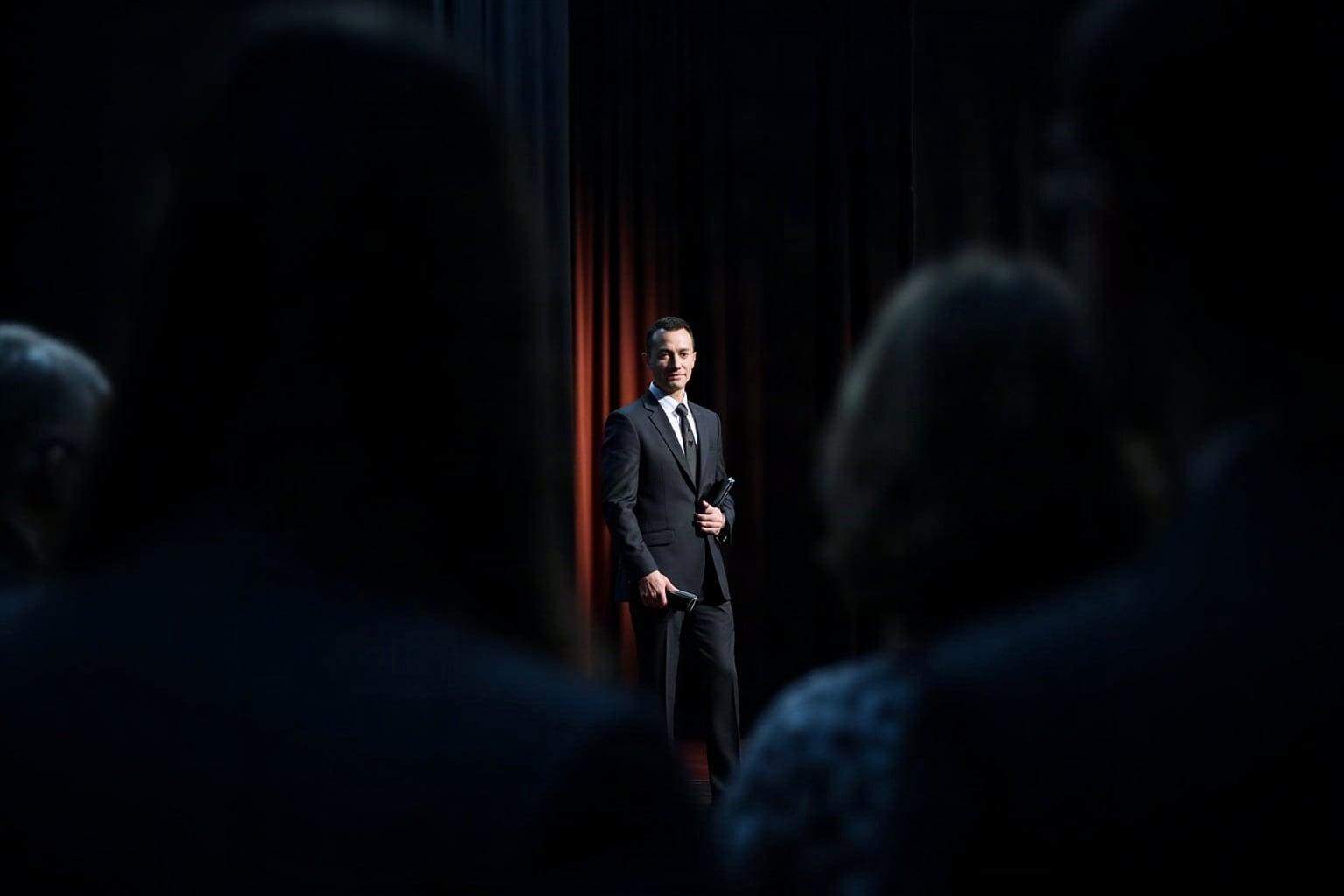
I'm Tim Dunton, a public speaking coach, executive coach and hypnotherapist. I work with people who present for a living and people who'd rather do anything else. What they share is a need to stand up and be clear, credible and calm. My coaching covers all three: what you say, how you say it, and how you feel while you're saying it.
Who I coach
- Senior leaders giving results, strategy updates and town halls
- Founders pitching to investors and customers
- Professionals presenting to boards, clients and conferences
- Academics and experts speaking outside their comfort zone
- Best men, brides and anyone with a big personal speech
- People returning to speaking after a bad experience
What we work on
Structure
A clear spine for your talk: an opening that earns attention, three or four ideas people remember, and an ending that lands. We shape it around your audience, not just your slides.
Delivery
Voice, pace, pauses, eye contact and stance. We work on what makes you sound like yourself on a good day, rather than a polished stranger.
Presence
How you enter, how you hold the space, and how you handle the moment the room goes quiet. Presence is a state as much as a skill, and NLP gives us ways to build it.
Questions and the unexpected
Hostile questions, technical failures, a mind going blank. We rehearse them so they stop being frightening and become manageable.
The nerves underneath
Most speaking coaches stop at technique. I also work on the fear itself, with hypnosis, so the adrenaline that used to scramble your thinking becomes energy you can use.
The most common speaking fears
- Going blank in front of everyone
- Shaking hands or a trembling voice
- Being asked a question you can't answer
- Boring people, or being judged
- Blushing or visibly sweating
- Comparing yourself with a confident colleague
Every one of these is workable. Some need technique: a structure that's hard to forget, a way to buy thinking time. Others need the fear itself to settle, which is where hypnosis comes in.
How public speaking coaching works
- Free call. We talk about the talk: the audience, the date, the stakes and what worries you.
- Diagnostic session. You speak, I watch, and we decide what will make the biggest difference.
- Build and rehearse. We shape the content and practise delivery, recording where useful.
- Rehearsal in hypnosis. You run the event in vivid detail from a calm, assured state.
- Final run-through. A last session timed close to the day, plus a short routine for the hour before you speak.
Coaching for specific events
Many clients come with a date in the diary: a keynote, an investor pitch, a results presentation, a wedding speech. We plan backwards from that date so the preparation peaks at the right moment. Others want lasting skill for a role that involves regular speaking; for them, a programme over a few months builds habits that hold.
A toolkit for structure
You'll leave with simple frameworks you can reuse: a one-line message you can say in a lift, a three-part body that carries an argument, and an opening and close that do real work. With those in place, writing a new talk takes hours rather than days, and remembering it becomes easy.
Before the day: a short checklist
- Know your first two sentences by heart
- Run the talk out loud at least twice, standing up
- Check the room or the link, and test the clicker or screen share
- Plan what you'll do if your mind goes blank
- Use your pre-talk routine in the last ten minutes
After the talk
We review what went well first, then one or two things to refine. That habit builds confidence over time, so each talk starts from a stronger place than the last.
Speaking on camera and in hybrid rooms
Virtual and hybrid talks bring their own problems: no audience reactions to read, a camera that drains energy, and colleagues in the room and on screen at once. We practise looking into the lens, keeping energy up through a screen, using slides without hiding behind them, and bringing remote listeners into the conversation.
Speaking as a leader
For leaders, every talk is also a signal about the organisation. Town halls, results presentations and all-hands meetings call for clarity, warmth and steadiness, especially when the news is difficult. We work on messages that are honest and reassuring at the same time, and on handling tough questions without becoming defensive.
Pitches and investor presentations
A pitch has to do a lot in a short time: establish credibility, tell a story and leave people wanting more. We tighten the narrative, rehearse the opening until it's effortless and prepare for the questions you dread most, so you walk in focused on the people across the table rather than on yourself.
Wedding and personal speeches
Not every big speech is at work. Best men, brides, parents and friends come to me before weddings, milestone birthdays and funerals. We find the heart of what you want to say, shape it so it flows, and settle the nerves so you can enjoy the moment.
Your voice
Nerves tighten the throat and speed everything up. We work on breathing low and slow, letting sentences finish, and using pauses that make people lean in. Small changes in pace and pitch make you sound more assured without sounding rehearsed.
Handling questions
Questions are where credibility is won or lost. You'll practise a simple method: pause, restate the question in a sentence, answer the core of it, and stop. We rehearse hostile, rambling and off-topic questions until they feel like opportunities rather than threats.
Notes, slides and memory
We decide how much to memorise and how much to leave flexible. Most speakers do best with a strong opening and close learned word for word, a clear map for the middle, and slides that support rather than script them.
In person in Farringdon, or online
Face to face, we work standing up with room to move. Online, we can rehearse exactly as you'll present on Teams or Zoom, which matters now that so many talks are virtual or hybrid. Many clients use both.
Why a coach who is also a hypnotherapist
Technique only helps if you can access it under pressure. Knowing you should slow down doesn't help when your heart is pounding. Because I'm also a hypnotherapist, we train the pressure response itself, so the technique you've practised is still there when you walk on. If the fear of speaking is the main issue, see hypnotherapy for fear of public speaking.
What changes
Clients describe walking on feeling ready rather than braced, finding their pace in the first minute, and actually enjoying the questions. Colleagues notice too. Talks become shorter, clearer and more persuasive, and the dread that used to start days beforehand fades.
Questions about public speaking coaching
My talk is next week. Is there time?
Usually, yes. Two or three focused sessions make a real difference to a single talk, and we can keep building afterwards.
Will you write my speech?
No, but we'll shape it together until it's clear, memorable and sounds like you.
Do you coach virtual and hybrid presenting?
Yes. Camera presence, energy through a screen and handling chat and questions are all part of it.
Can you coach a whole team?
Yes. Small-group workshops and one-to-one sessions for several speakers work well before a conference or pitch. See executive coaching.
What does it cost?
A free call, then £195 an hour face to face or £150 by video, or a 7-hour programme. See fees.
I've had a bad experience speaking. Can I recover my confidence?
Yes. A talk that went wrong often leaves a stronger mark than a dozen that went well. We revisit it calmly in hypnosis so it loses its sting, then rebuild your confidence through practice on smaller, safer occasions before the next big one.
How do I stop my mind going blank?
We give you a simple structure that's hard to lose, a recovery line for the moment it happens, and calm rehearsal of that exact moment in hypnosis. Together they make a blank both less likely and much easier to handle.
Related: how to overcome stage fright and performance coaching.
Your first call is free: 15 to 30 minutes on the phone or video. Or ring 07923 495558.